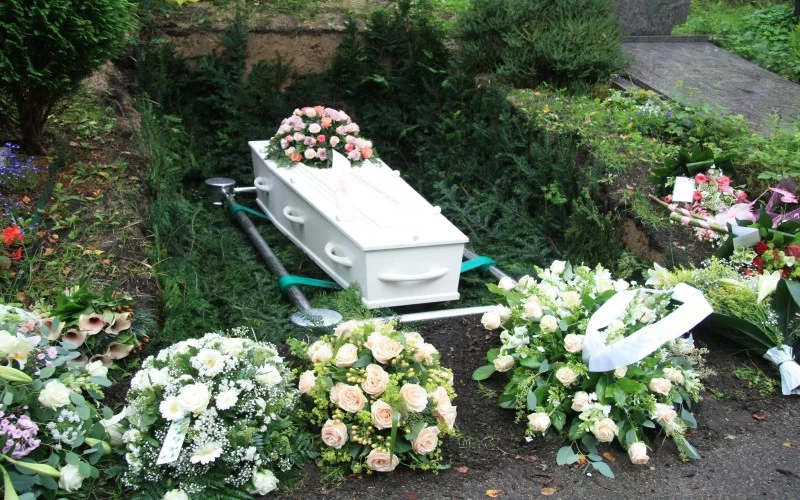
White coffins are often chosen for their meaning as much as their appearance. For many families, they represent purity, peace, and a celebration of life rather than a focus on loss. Whether you are planning a cremation, burial, or a funeral at a natural burial ground, a white coffin can feel like a more personal and thoughtful choice.
In this guide, you’ll discover what white coffins symbolise, the different types available, why they are becoming more popular, and how funeral traditions surrounding white coffins have changed over time.
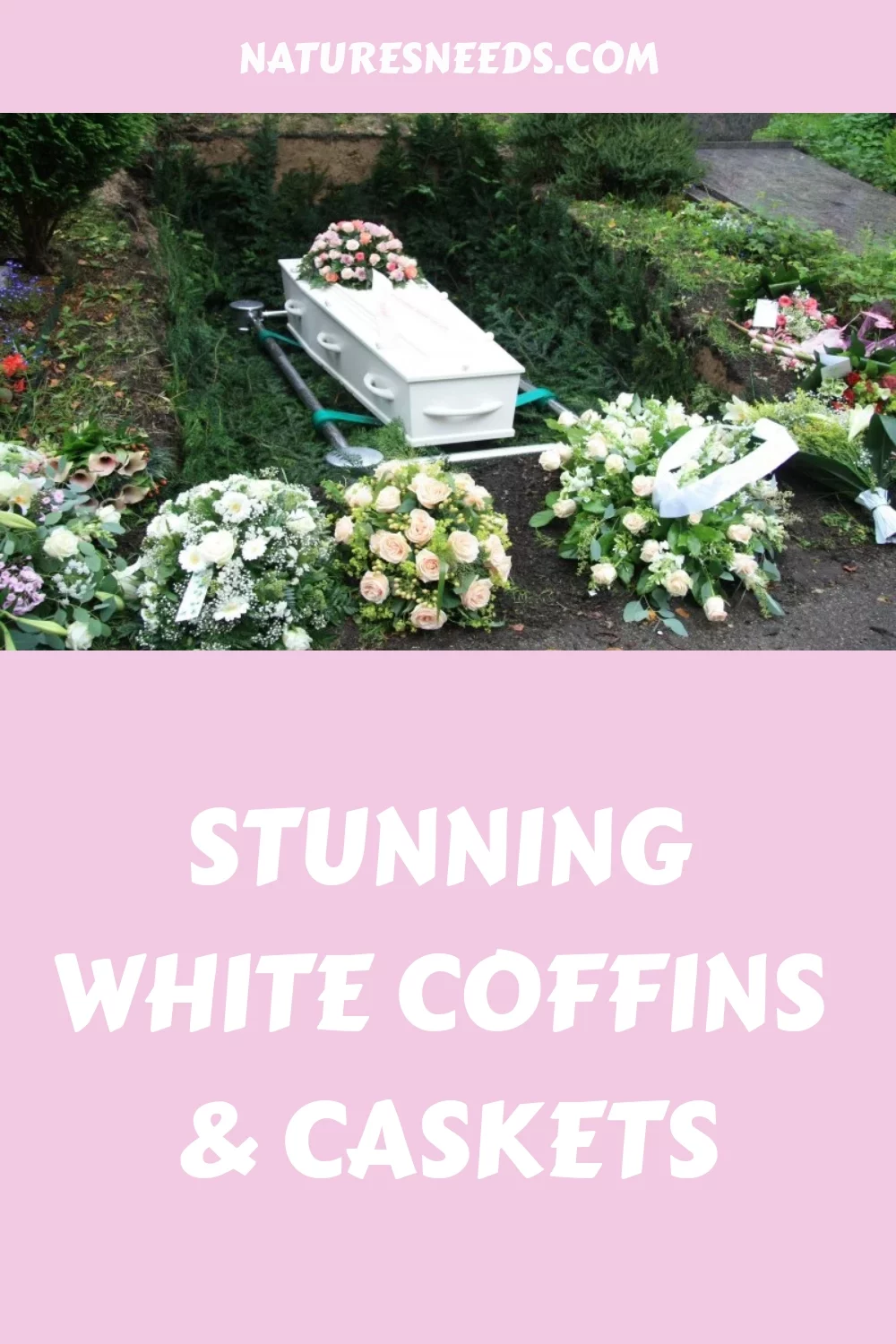
White coffins and caskets are a popular choice for both traditional funeral services and alternative burial options. They can be made from a range of materials including wood, metal, fibreglass, wicker such as white willow, and white cardboard coffins.
What Do White Coffins Symbolise?
The colour white has a strong spiritual association. In ancient spiritual traditions, white symbolises purity and innocence. It is linked to the divine and associated with light, knowledge, and peace.
In the Christian world many people think of the white wings of angels, white robes, or traditional depictions of God with a white beard. Some people believe white represents the soul, while others feel it symbolises the heart or spiritual rebirth.
Psychologically, white is associated with cleanliness, simplicity, fresh beginnings, and renewal. Unlike darker colours, white reflects light, creating a softer and calmer atmosphere during a funeral service.
For this reason, white coffins are often seen as less heavy or severe than traditional dark wooden coffins. Families sometimes choose them because they create a gentler and more uplifting feeling during the funeral ceremony.
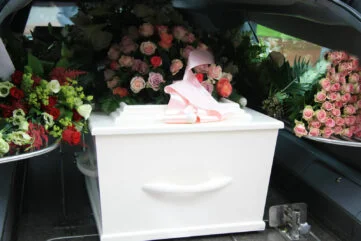
A white coffin is often viewed as something special and meaningful. This may be one reason why white coffins have traditionally been chosen for children’s funerals.
What White Coffins Symbolise
- Purity – innocence, honesty, and spiritual cleanliness
- Peace – a calmer and softer farewell
- Light – hope, spirituality, and guidance
- Rebirth – new beginnings and transformation
- Simplicity – moving away from heavy traditions
- Celebration of Life – focusing on the person rather than the loss
- Love & Remembrance – creating a meaningful and personal farewell
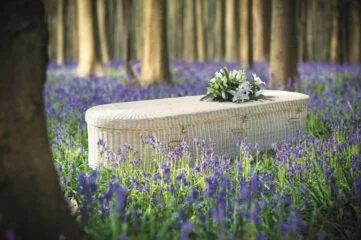
White Wicker Coffin for a Natural Burial
White Coffins in Dreams
The symbolism of white coffins extends beyond funerals and religion and even appears in dream interpretation and psychology.
Dreaming about a white coffin is often interpreted as a positive symbol rather than a negative one. Some believe it represents the end of negative thoughts, bad habits, or emotional burdens and the beginning of a new phase of life.
In this sense, the white coffin symbolises transformation, renewal, and personal growth. Instead of representing death literally, it can represent leaving an old version of yourself behind and moving towards something cleaner, calmer, or more meaningful.
This connection between white, rebirth, and emotional renewal is one reason why the colour continues to have such a strong symbolic power in funerals and remembrance ceremonies.
Why White Coffins Are Becoming More Popular
White coffins and caskets are increasing in popularity. This is not only because they look elegant and there is now a wider choice of finishes and interiors, but also because attitudes towards funerals are changing.
For many years the funeral industry in the UK was extremely traditional and, in many ways, secretive. Talking openly about death was often considered taboo, which meant that many people simply followed convention without questioning it.
Today that is beginning to change.
People are becoming more open to using funerals as a celebration of life rather than purely as a traditional religious ceremony. Families increasingly want funerals to reflect the personality, values, and wishes of the person who has died.
This shift has led to a much larger range of white coffins and caskets than ever before, as well as an expanding choice of materials and styles.
Modern white coffins can now be made from sustainably grown white willow, recycled white cardboard, wicker, bamboo, or other biodegradable materials suitable for natural burial grounds and eco-friendly funerals.
If you are considering an environmentally friendly funeral, you may also want to read our guide on how to choose the right natural burial ground.
Some people even choose not to have a coffin at all and instead opt for a white biodegradable burial shroud as part of a natural funeral.
For environmentally aware families, white eco coffins can feel like a much more fitting choice than traditional wood veneer or solid hardwood coffins.
White Coffins in Different Cultures and Religions
White has long been associated with funerals and mourning in many different cultures around the world.
In some countries, including parts of Asia and Sri Lanka, white is traditionally connected to death, mourning, purity, and spiritual transition. In these cultures, white is often viewed as the most appropriate colour for funeral ceremonies.
Religion has also historically influenced the use of white coffins.
In the Roman Catholic tradition, it was common for children’s funerals to use white coffins instead of darker adult coffins. Priests would also wear white cassocks rather than the black or purple garments normally used for adult funerals. This was done to distinguish the ceremony and symbolise innocence and purity.
These traditions continue to influence how many people think about white coffins today, even as modern funerals become less formal and more personalised.
Last Thoughts About White Coffin Meanings
White coffin meanings vary from country to country, religion to religion, and family to family.
For some people, a white coffin symbolises purity and innocence. For others, it represents peace, simplicity, light, rebirth, or spiritual transition.
Some families choose a white coffin because it reflects the personality of the person who has died. Others choose one because it creates a softer and less traditional atmosphere during the funeral ceremony.
Ultimately, the meaning of a white coffin is deeply personal.
At its heart, choosing a white coffin is often about love, remembrance, and creating a farewell that feels right for the person being honoured.
Looking For Practical White Coffin Options?
If you would like to explore practical white coffin options for burial or cremation, including white willow coffins, white cardboard coffins, eco-friendly choices, pricing, and natural burial suitability, you can read our full guide below.

Generated with Pin Generator
FUNERAL QUOTES
Get The Little Book Of Spiritual Quotes For Funerals
- Never be stuck for words
- Express your thoughts & feelings
- Create a beautiful funeral